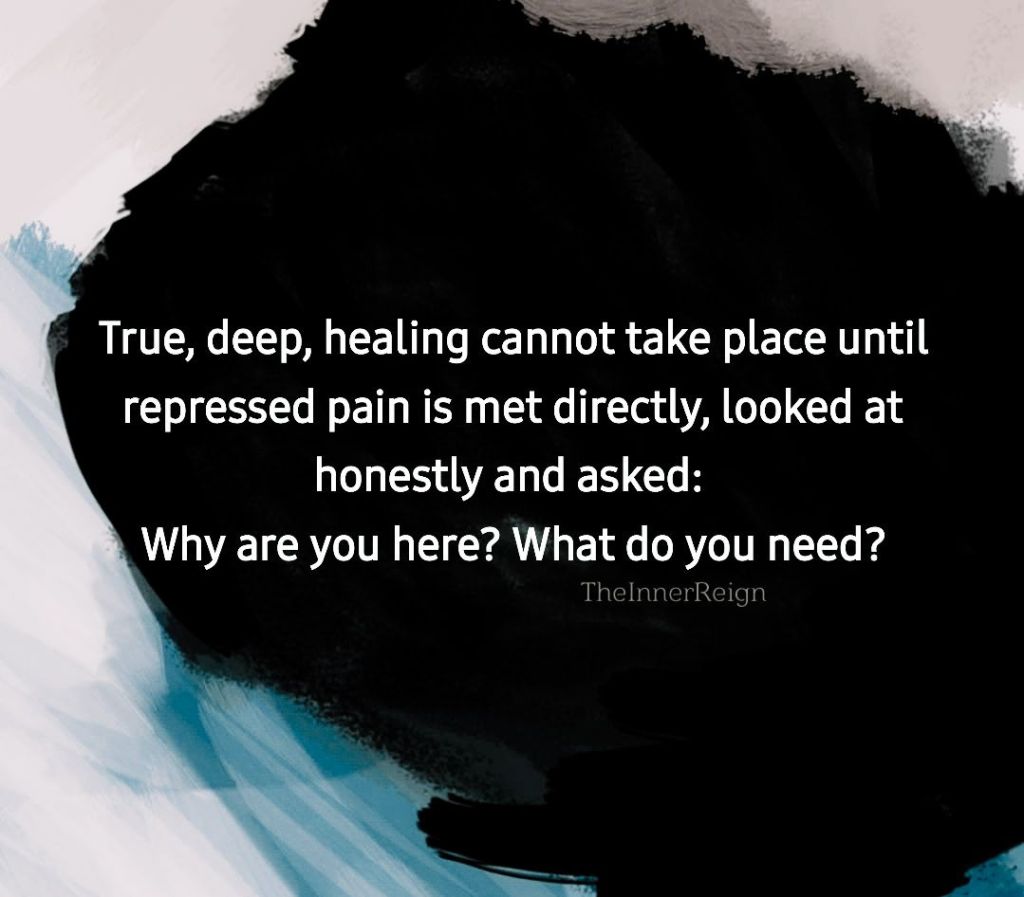
Most of us were never taught how to do this. We were taught how to endure, to perform, to stay functional. Pain was something to push through, manage, or outgrow as quickly as possible. And so we learned to store it rather than understand it.
But pain that is stored does not remain passive.
Psychologically, what is repressed doesn’t disappear into nothingness, it slips beneath awareness and begins to express itself indirectly. Carl Jung described this as the shadow: the parts of us shaped by experience that were never integrated into conscious life. These parts don’t announce themselves clearly. They surface as irritability, emotional numbness, over-control, sudden withdrawal, self-sabotage, or repeating patterns that seem to undermine the very things we say we want.
This is why people can appear “fine” on the surface while quietly undoing their own progress. It isn’t a lack of desire for a better life. It’s unresolved pain attempting to protect itself using outdated strategies.
From a trauma-informed perspective, this makes sense. The nervous system adapts to survive. If pain once went unmet, misunderstood, or punished, the body learned to suppress it. Over time, suppression becomes habit. The body continues reacting to the present through the lens of the past, not because it’s broken, but because it hasn’t yet been given new information.
Stoic philosophy understood this long before modern psychology named it. Marcus Aurelius wrote that what we fail to examine within ourselves ends up disturbing us as if it were external. In other words, what we don’t consciously govern begins to govern us. Not as punishment, but as consequence.
This is where healing shifts from avoidance to engagement.
To look directly at pain does not mean indulging it, dramatizing it, or letting it define you. It means relating to it differently. Pain, when approached with curiosity rather than resistance, begins to reveal its function. It often carries unmet needs, unspoken boundaries, unresolved grief, or misdirected loyalty to an earlier version of yourself.
When you ask pain why it is here, you restore meaning.
When you ask it what it needs, you restore agency.
This simple internal dialogue changes the entire dynamic. You move from being overtaken by reactions to becoming a witness of your inner world. The pain loses its need to shout through behavior because it is finally being listened to directly.
Practically, this looks like slowing down in moments of emotional charge and asking a few honest questions:
What am I actually responding to right now?
Does this reaction belong to the present, or to something older?
What would support or safety look like in this moment, instead of control or avoidance?
These are not intellectual exercises. They are acts of self-governance.
As this practice becomes consistent, something subtle but powerful occurs. Patterns soften. Choices widen. You begin responding instead of reacting. The nervous system learns that it no longer has to protect through sabotage, withdrawal, or rigidity because awareness is now present.
This is how a more thriving life is built. Not by erasing pain, but by integrating it. Not by chasing constant comfort, but by developing the capacity to remain conscious in moments that once ruled you.
Healing, at its deepest level, is not about becoming someone else. It is about reclaiming parts of yourself that were left behind in the name of survival and allowing them to finally rejoin the whole.
And when that happens, life no longer feels like something you’re bracing against. It becomes something you are actively, deliberately, and honestly living.
 Soulfully Rich
Leave a comment