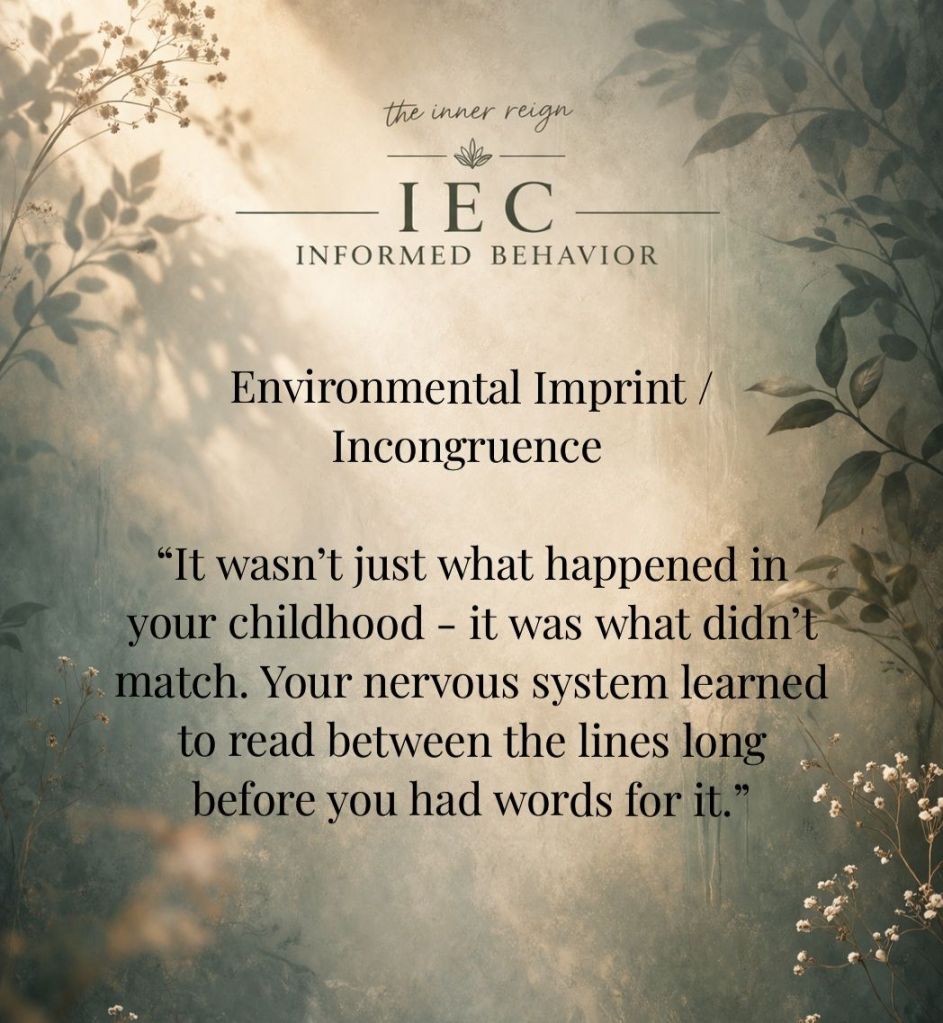
Many people think trauma has to be overt to leave a mark. Abuse, neglect, or extreme events have been the standard of trauma. But what if the source of your most persistent struggles was quieter, more stealthy, and almost invisible? What if it wasn’t cruelty or neglect in the traditional sense, but inconsistency, emotional unavailability, and unpredictable connection that shaped you?
This is where Inconsistent Emotional Connection-Informed Behavior (IECIB) comes in. The framework recognizes that even well-intentioned caregivers, families, and systems can leave subtle imprints that persist in the body, mind, and relationships. These imprints often show up as patterns we recognize but don’t understand. Why do we keep repeating the same mistakes, sabotaging our own success, or remaining tethered to people and situations that aren’t healthy?
How the Body Holds Memory
Research in neuroscience and psychophysiology shows that the body remembers what the mind may not. The limbic system, including the amygdala and hippocampus, encodes emotional experience as physical and chemical patterns. When emotional connection is inconsistent in childhood (sometimes loving, sometimes distant, sometimes absent) these patterns form “expectation loops”.
Your nervous system learns unpredictability.
Your body anticipates withdrawal or misattuned responses.
Your mind creates strategies to cope, often unconsciously: people-pleasing, avoidance, overcompensation, or self-sabotage.
Even when you consciously reject these behaviors, your system can default to them automatically. This is why people often feel frustrated by repeated patterns: they know what’s happening is detrimental, yet something inside them keeps pushing the same button. IECIB identifies these imprints and helps bring awareness to them, so you can consciously choose your responses.
Inconsistent Emotional Connection: The Invisible Driver
Unlike overt trauma, inconsistent emotional connection (IEC) doesn’t leave a clear, external scar- it leaves incongruence. You might have had parents who were loving in moments but emotionally unavailable at others, creating a subtle tension: safety was never fully predictable, and attunement was incomplete.
This incongruence produces:
1. Internal Conflict – You desire connection, yet anticipate withdrawal or disappointment.
2. Self-Doubt & Hypervigilance – You second-guess your perceptions and feelings, constantly scanning for cues of rejection.
3. Behavioral Loops – You repeat patterns learned as a survival strategy: clinging, over-adapting, or preemptively disengaging.
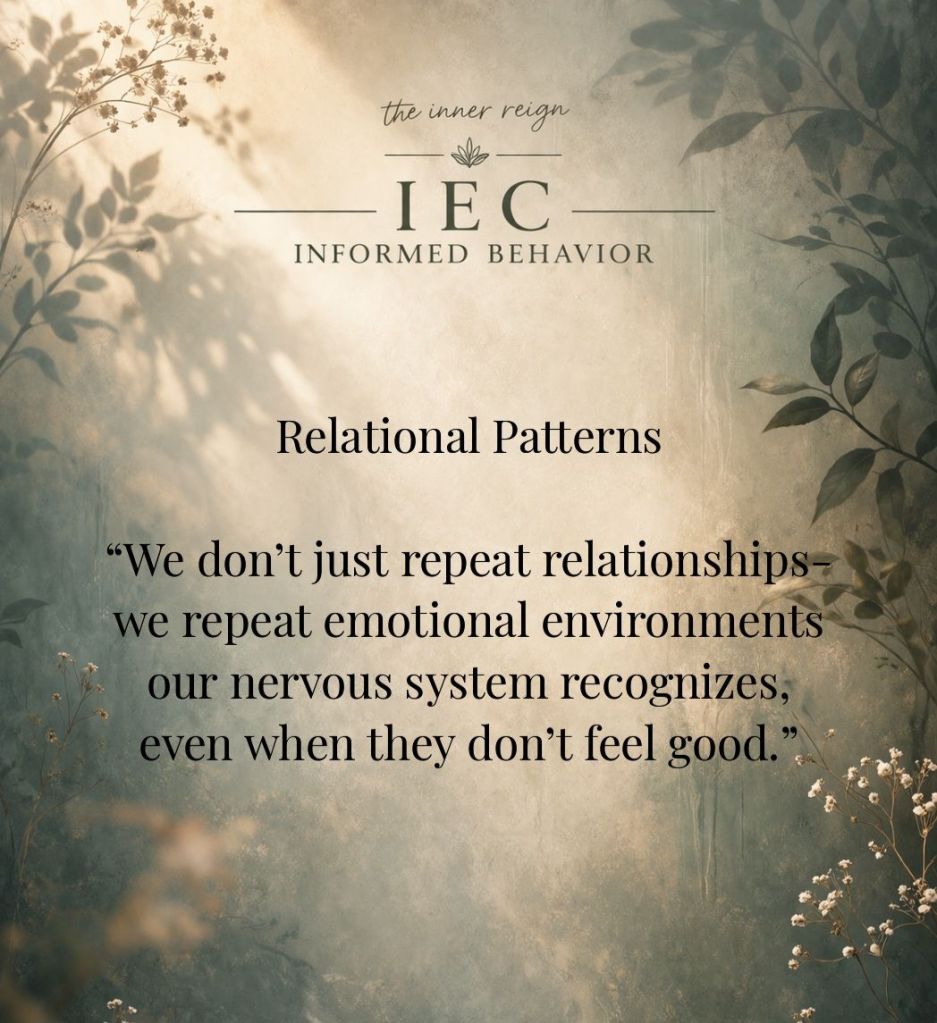
In essence, the body encodes the “rules” of connection from childhood (even when they were inconsistent or contradictory) and continues to operate on them, long after conscious reasoning knows better.
Why Awareness is Freedom
IECIB emphasizes that real change begins with awareness. Recognizing that your impulses, anxieties, and repeated missteps often stem from invisible imprints (not personal failure) is liberating. It allows you to:
Identify subtle triggers in relationships, work, and self-perception.
Understand the origin of recurring behaviors.
Create new, intentional patterns rooted in self-knowledge rather than survival instinct.
Science backs this approach. Studies on attachment theory and developmental neuroscience show that even small inconsistencies in early caregiving influence stress regulation, emotional resilience, and relational behavior in adulthood. The difference between overt abuse and IEC is subtle but the effects are real, pervasive, and measurable.
Transforming the Patterns
IECIB offers practical tools to reclaim agency:
Observe: Notice when a pattern repeat without judgment.
Trace: Reflect on where it may have originated, especially in early relational inconsistencies.
Reframe: Decide consciously whether this behavior serves your present life.
Practice: Implement new strategies to respond differently, rewiring your nervous system over time.
The beauty of this work is that it doesn’t require reliving trauma- it requires curiosity, self-awareness, and the courage to interrupt old loops. By doing so, you reclaim freedom that was never fully yours before: the freedom to respond from clarity, presence, and intentionality.
In summary:
Even subtle childhood experiences (especially inconsistent emotional connection) leave imprints in the body that shape adult behavior in ways most people can’t immediately see. IECIB offers a lens to identify, understand, and transform these invisible drivers. Your patterns are not a moral failing. they’re information, a map. Once decoded, they become the pathway to your most conscious, intentional, and self-led life.
 The Inner Reign
Leave a comment